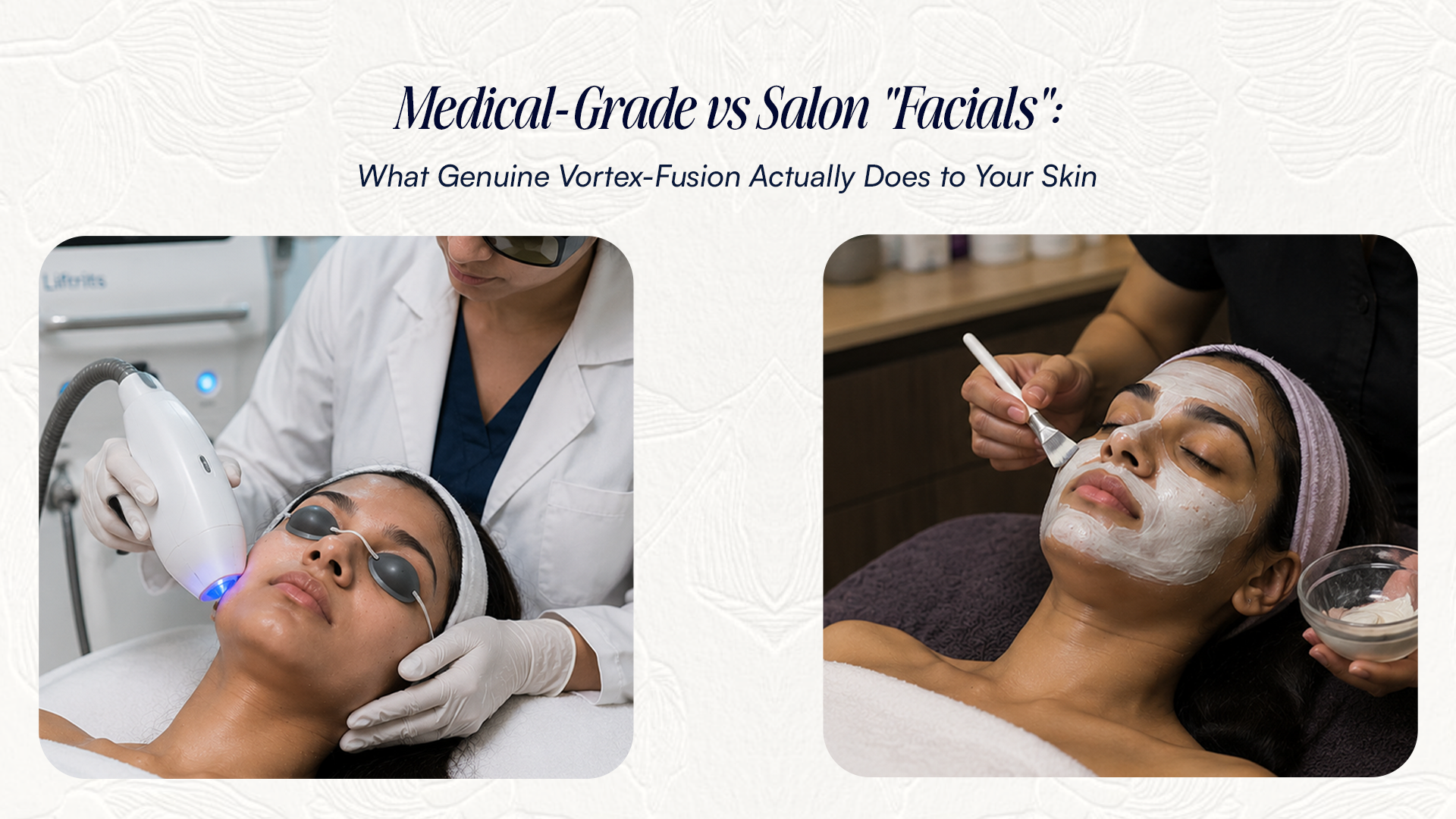
Walk into almost any salon today and you'll find a "medical facial" on the menu usually a slightly upgraded version of a standard facial, sometimes with a serial number or a foreign-sounding device name attached. The problem is, calling something medical-grade doesn't make it medical-grade. The actual difference lies in the equipment doing the work, the certification behind it, and who's actually operating it, not the name printed on the price list.
What Actually Makes a Facial "Medical Grade"
A genuine medical facial isn't defined by how it feels in the chair, it's defined by what the equipment is actually capable of doing to the skin at a cellular level, and whether that equipment has gone through real regulatory testing to prove it's safe and effective. Devices used in a true medical facial treatment are typically FDA-approved or CE-certified, meaning they've been through documented clinical evaluation, not just imported and rebranded with a premium-sounding name.
This is a meaningfully different category from a salon device that mimics the sensation of a "deep clean" or a glow without any of the underlying, tested technology behind genuine skin-level results.
The Trust Gap Nobody Talks About Openly
Here's the uncomfortable part: most people can't visually tell the difference between a real medical-grade device and an uncertified imitation during the treatment itself. Both can involve suction, water, serums, and a pleasant, spa-like sensation. The difference only becomes obvious in the results or in worse cases, in the complications that follow when uncertified equipment is used incorrectly or on skin it was never designed for.
This is exactly why the search for a best medical facial should start with a fairly unglamorous question: what regulatory approval does the device actually have, and can the clinic show it?
What This Looks Like at VCare's Aesthetic Clinic Chennai Clients Actually Trust
At Aesthetic Clinic Chennai residents know as VCare's Centre of Excellence, every device in the clinic is FDA-approved or CE-certified, sourced directly from Israel, Korea, Europe, and the U.S. not generic equipment rebranded for the local market. The Hollywood Spectra Laser, for example, is described on VCare's own site as the industry benchmark for erasing pigmentation and delivering the kind of even, camera-ready brightening that many salon "facials" promise but simply don't have the underlying technology to actually produce.
The Difference Shows Up in Depth, Not Just Sensation
A genuine medical facial treatment works at a level a salon device generally can't reach targeting pigmentation, vascular concerns, texture, and collagen activity with calibrated, tested energy, rather than surface-level exfoliation and hydration alone. VCare's Skin Radiance Treatment, built on IPL technology, is a clear example: it uses adjustable wavelengths and controlled pulses of light specifically calibrated to target pigmented and vascular concerns while stimulating real collagen production not just a temporary plumping effect that fades within a day or two.
Assessment Is Part of What You're Actually Paying For
One of the quieter differences between a real clinical facial treatment and a salon version is what happens before the treatment even starts. A salon facial is typically the same protocol for every client who walks in. A genuine medical facial dermatologist-led process begins with an actual skin assessment because the correct settings, wavelength, and approach depend entirely on the individual's skin type and concerns, not a fixed, one-size-fits-all routine.
At VCare, this starts with Digital Skin Diagnosis, which maps texture, pigment, pore condition, and collagen levels before any treatment plan is built. This step alone is often the clearest signal of whether a provider is genuinely operating at a medical standard or simply running the same routine on every client regardless of their actual skin.
What Happens When Uncertified Equipment Is Used Anyway
It's worth being direct about the actual risk here, not just the quality difference. Devices that haven't gone through FDA or CE certification haven't been through the documented safety testing that verifies they work as intended on real skin, across real skin tones, without unpredictable side effects. That doesn't automatically mean every uncertified device is dangerous but it does mean there's no independently verified guarantee that it isn't, which is a very different position from a device that has actually been through that process.
This matters more than it might seem in the moment, because the visible outcome of a facial whether it's a genuine medical facial treatment or an uncertified imitation often looks similar immediately afterward. Skin can appear brighter or smoother right after almost any treatment involving heat, suction, or serums, certified or not. The real difference tends to show up later: in how long results actually last, whether the skin responds consistently over repeated sessions, and whether anything unexpected happens with prolonged or repeated use on equipment that was never properly tested for it.
What Genuine Results Actually Look Like Over Time
A useful way to think about the difference is durability rather than the initial sensation. A best medical facial built around certified technology tends to produce results that build progressively collagen activity, pigment correction, and tone improvement that continues developing over subsequent weeks, not just a temporary glow that fades within a day or two. This is a direct result of the technology actually working at a cellular level rather than producing a surface-level, temporary effect.
Salon facials aren't without value many offer genuine relaxation and light exfoliation benefits. The distinction is really about expectation: a spa facial and a genuine clinical facial treatment are solving different problems, and confusing one for the other is usually where disappointment comes from.
Questions Worth Asking Before Booking Any Facial
Before committing to any provider claiming to offer medical-grade results, a few direct questions tend to reveal a lot: Is the equipment FDA-approved or CE-certified, and can that be verified rather than just claimed? Is there an actual skin assessment before treatment, or does the same routine apply to every client regardless of skin type or concern? Is the treatment supervised by someone with genuine dermatological training, or performed by staff without that background?
None of these questions require any technical expertise to ask they simply require being willing to ask them, which is often the single biggest difference between someone who ends up with a genuine medical facial treatment and someone who ends up with a well-marketed imitation of one.
Why a Single Facial Rarely Tells the Whole Story
It's also worth being honest that even a genuine medical facial treatment is usually one piece of a larger picture, not a complete transformation on its own. For anyone dealing with more than surface-level dullness, VCare's broader< a href="https://www.vcarecoe.com/single-day-transformation.php"> glass skin treatment protocol combining multiple certified technologies in a single extended session exists specifically because one treatment, however good, has limits that a properly sequenced, multi-technology approach doesn't.
Similarly, for pigmentation and tone concerns specifically, VCare's korean glass skin treatment using Q-Switch ND:YAG technology addresses what a standard facial simply isn't built to reach deeper pigment correction rather than surface brightening alone.
Building a Plan Instead of Guessing
Rather than assuming a generic facial protocol will address whatever's actually going on with your skin, VCare's Skin Treatment for Face approach builds a sequence around the specific concern identified during assessment which is really the whole point of medical-grade care: matching the right certified technology to the right concern, rather than applying the same routine to everyone.
The word "medical" on a menu doesn't make a treatment medical-grade the certification behind the equipment, and the expertise behind the calibration, does. That distinction is really the entire difference between a facial that feels good for an afternoon and one that actually changes your skin.
Book your consultation at Skin Clinic Bangalore | Discover Vcare COE's Difference
Frequently Asked Questions
What actually makes a facial "medical grade" instead of just a regular facial?
The defining factor is the equipment itself whether it's FDA-approved or CE-certified and has gone through real regulatory testing combined with whether a qualified professional is assessing skin condition and calibrating treatment accordingly, rather than applying a fixed protocol to every client.
Can a salon really offer the same results as a medical facial treatment?
Generally, no. Salon equipment typically isn't certified to the same regulatory standard, and often can't reach the depth or precision needed to address pigmentation, vascular concerns, or collagen activity the way genuine medical-grade technology can.
How do I find a medical facial near me that's actually legitimate?
Ask directly whether the equipment used is FDA-approved or CE-certified, whether a proper skin assessment is done before treatment, and whether the person performing it has relevant dermatological training not just whether the word "medical" appears on the treatment menu. The same applies when searching for a clinical facial near me: certification and assessment matter more than proximity or price.
How is a clinical facial treatment different from a regular spa facial?
A clinical facial treatment uses certified, regulated technology targeting specific skin concerns at a deeper level, typically preceded by a real skin assessment whereas a standard spa facial is usually a fixed, relaxation-focused routine applied uniformly to every client.
Does a medical facial hurt more than a regular facial?
Not necessarily. Genuine medical-grade devices are generally designed with comfort in mind, often including built-in cooling systems, and most people describe the sensation as mild warmth rather than pain. Discomfort is more often a sign of poorly calibrated or unsuitable equipment than of genuine medical-grade technology.
Why do some uncertified facials still show visible results?
Heat, suction, and topical serums can produce a temporary brightening or smoothing effect on almost any skin, certified equipment or not. The real test isn't the immediate look afterward, but whether results are consistent, safe across repeated sessions, and backed by technology that's actually been tested for that purpose.